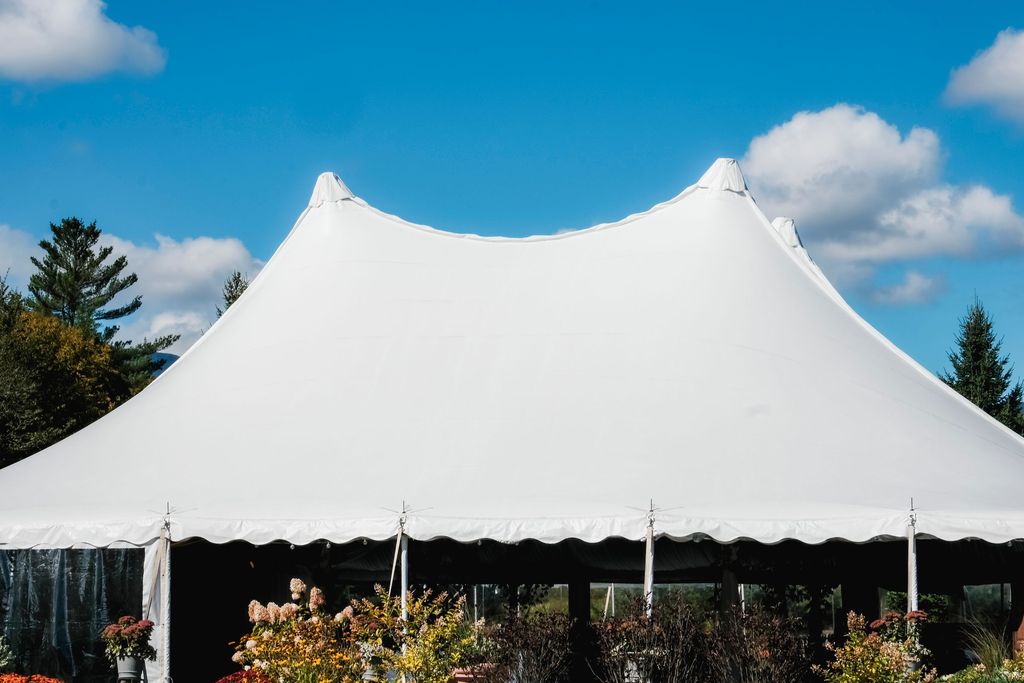
Planning event cooling
- Book early for warm-season events. Equipment and generators get busy during peak heat and the event season.
- Tents gain heat fast. Fabric walls and roofs offer little insulation and lots of sun exposure, so tents typically need more cooling per square foot than buildings.
- People add up. A crowded, active room (dancing, catering staff) adds a lot of heat — include peak headcount.
- Power and noise: plan generator placement, fuel, cable runs, and how far units sit from guests and stages.
- Pre-cooling: start cooling well before guests arrive; it’s easier to hold a temperature than to pull it down mid-event.
What a provider will ask
- The space: square footage, ceiling height, type of space, and how many people or how much equipment is in it.
- Existing system: what failed (if anything) and its tonnage — the nameplate on the existing unit is a great shortcut.
- Power: what’s available near where the unit would sit (standard outlets, 208/240V, three-phase), or whether a generator is needed.
- Placement: where the unit can go, how hot exhaust air and condensate will be handled, and how ducts or hoses get inside.
- Duration and access: start date, expected length, delivery access, and working hours.
How it works
- Send the form. For a failure in progress, choose “Emergency” so it’s flagged as urgent.
- We line it up with a vetted, licensed and insured local rental company that serves your area and has the right equipment.
- The provider contacts you to confirm sizing, power, and logistics, and quotes you directly. There’s no fee to you for using this service.
Estimate the size you need with our calculator (choose “Event tent”).